Bangladesh: Breaking the Cycle of Impunity
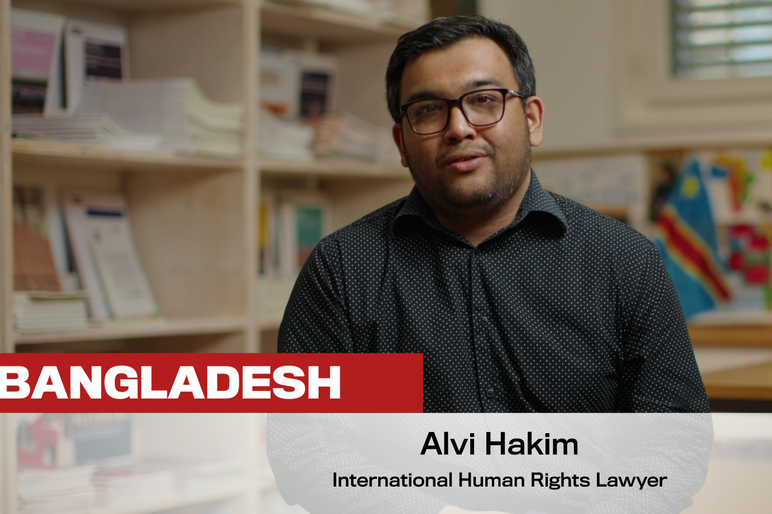
After years of repression and a violent turning point in July 2024, Bangladesh is navigating a critical moment for human rights. While the scale of abuses remains stark, signs of change are beginning to emerge, from a landmark court ruling to growing pressure for accountability. Alvi Hakim is a legal and operations advisor at the Bangladesh Legal Aid and Services Trust (BLAST), partner of OMCT within the United Against Torture Consortium’s work in Bangladesh. In this interview, he shares his perspective on a country at a crossroads, and why he still sees grounds for hope.
How would you describe the current human rights situation in Bangladesh?
It is a complex and difficult moment. After 15 years of increasingly repressive rule, the country experienced a major rupture in July 2024. In just three weeks, around 1,400 peaceful protesters were killed and more than 10,000 were subjected to torture, enforced disappearances or severe injuries. These numbers reflect the scale of the crisis, but also the urgency for change. Protests ultimately led to the fall of the government and renewed hope for human rights.
What did investigations reveal about the violence?
With my organisation, the Bangladesh Legal Aid and Services Trust (BLAST), we interviewed 82 severely injured victims and found that more than 91% had been shot by armed forces, often with rubber bullets or live ammunition. 200 to 300 people lost their eyesight as a result. These figures show how systematic the violence was. They help us document abuses and push for accountability.
Has the situation improved since then?
The fall of the government has created a period of instability, with one to two weeks when there was effectively no functioning authority in a country of 180 million people. There were reports of continued violence, including more than 170 people killed in mob attacks and over 389 journalists targeted. However, this period also opened space for reform and public debate.
What are the main structural challenges today?
One of the biggest issues is impunity. Bangladesh passed an anti-torture law in 2013, but in 13 years, although more than 50 torture cases have been presented to judges, only one has resulted in a successful judgment. At the same time, reports indicate that 923 people were tortured or killed in custody between 2013 and 2024. This gap between law and enforcement is central.
Is there still reason to be hopeful?
Yes. Change is starting to happen. That single successful torture case is a landmark, it shows that accountability is possible. There is also a new political context: many current leaders themselves were victims of repression, with an estimated 70 to 80% having experienced torture or harassment. This creates a unique opportunity for reform from within.
What kind of reforms could make a real difference?
Strengthening independent institutions is key, especially via a truly autonomous National Human Rights Commission. There is also a need to modernise laws and systems that date back to 1860 when Bangladesh was a British colony, and to ensure protection for journalists, minorities and human rights defenders. These are long-term changes, but the momentum is there.
Where does your hope come from today?
It comes from people. In the aftermath of the violence, ordinary citizens, doctors, lawyers, architects, mobilised to help victims. In a country of 180 million, that collective response matters. Bangladesh has a history of resisting injustice, including its independence struggle in 1971, won in just nine months. That resilience is still present today.