Hope in Action: Interview with UN Special Rapporteur on the Situation of Human Rights Defenders
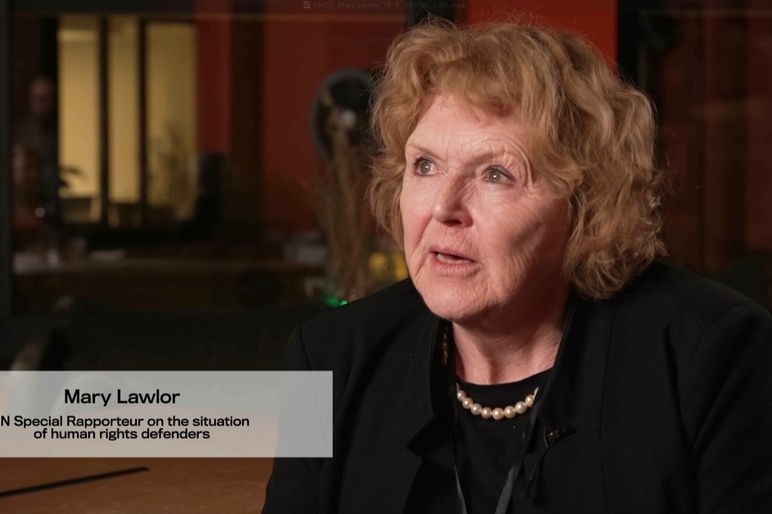
As today marks International Human Rights Defenders Day, this interview with Mary Lawlor, United Nations Special Rapporteur on the situation of human rights defenders, highlights the challenges defenders face, the stories that inspire her, and the enduring power of hope. Lawlor shares personal anecdotes and global perspectives, emphasizing that everyone - regardless of their background - can contribute to protecting defenders and keeping hope alive.
What struggles do human rights defenders face?
The main challenges for human rights defenders - people who defend the rights of others at great personal cost - is that they are targeted simply because they are trying to help others. This takes the form of long-term imprisonment, criminalization, killings, and attacks on women, children, and LGBTI defenders. There are physical attacks, online harassment, stigmatization, smear campaigns, and surveillance. When a defender is put in prison for a long sentence, especially an innocent person, it isolates them from their family and friends. The community becomes afraid, and other defenders hesitate to take up the work, especially when families are targeted.
Can you recall something or someone that inspired you and your work?
I look back on my time as director of Amnesty International Ireland, when members mobilized to help abolish the death penalty and ratify human rights covenants. I’m proud of how people came together to make a difference.
Later, when I set up Front Line Defenders, at the request of the Irish government, I wrote the consultation document for the EU partners under their 2004 Presidency which led to the EU Guidelines on human rights defenders. These led the EU and other states to create their own protections and budgets for defenders.
One of my favorite reports was for the 25th anniversary of the Declaration on Human Rights Defenders, which highlighted successes like children in Bangladesh stopping forced marriages, and mothers in Yemen reuniting families after conflict.
I also remember Brother Hector, an elderly defender in the Amazon, who spoke so passionately about atrocities against Indigenous people that he half-lifted out of his chair and said, “Forgive me, it’s the spirit talking.” That’s what human rights defenders are about - their spirit, their hope, and their refusal to give up.
What has kept your hope alive for human rights defenders through your work?
I started this work in the 1970s, when Latin America was under military dictatorships, and there were awful regimes elsewhere in Africa and Eastern Europe. Over the decades, we’ve seen genocides, conflicts, and new forms of repression, but human rights defenders continue to mobilize and work against injustice and for equality. They are people who will take the risk and do the work no matter what. The movement continues to grow, even with all the backsliding and attacks. What gives me hope is seeing defenders everywhere who refuse to be silenced and who inspire others to act.
Every small victory counts. What inspires action is knowing that change is possible. Even people who aren’t working in human rights but are moved by injustice can make a difference. That spark of outrage is part of the movement. Everyone needs to play their part, and together, we can protect defenders and keep hope alive.