“The Fight Against Torture Must Not Remain Mere Words”

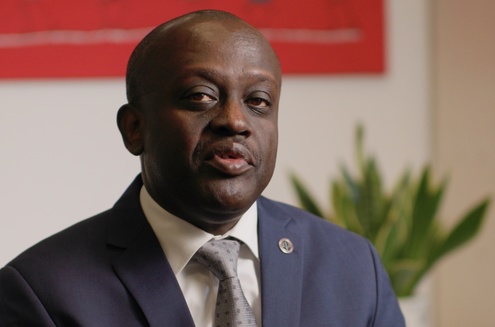
Claudine Aicha Tsoumbo is a Gabonese human rights activist and president of the Association Réconciliation, committed to defending victims of the post-election repression that followed Gabon’s 2016 elections. As a nurse present at the opposition headquarters during the August 2016 assault in Libreville, she provided assistance to victims and documented the violence committed during that period, which marked the beginning of her commitment to justice and truth.
A survivor of acts of torture carried out repeatedly by the authorities in 2016 and 2024, in a context of ongoing repression against critical voices, she now advocates for the establishment of a Truth, Justice, and Reparations Commission in Gabon. She received support from the World Organisation Against Torture (OMCT) to participate in Gabon’s review by the United Nations Committee Against Torture (CAT) in April 2026, the country’s first review in nearly 15 years.
In a political climate still shaped by the aftermath of the 2016 post-election crisis, concerns about security force violence, and the challenges of political transition, she reflects on the human rights situation in Gabon, the personal cost of her activism, and the urgent need to strengthen mechanisms for justice and accountability.
What forms of oppression, threats, or intimidation do human rights defenders face in your country?
These include arbitrary arrests. As soon as you denounce certain practices, a pretext is quickly found and you can find yourself overnight in the premises of the B2 or the Directorate-General for Counterintelligence and Military Security (DGCISM), without any real safeguards against abuse of power.
The B2 was originally a place reserved for law enforcement officers, a counterintelligence service that mainly handled cases involving uniformed personnel. But over time, it has become, for many people, a place associated with torture. When someone is taken there, they know they will not leave without having endured some form of violence or torture. Some come out alive, sometimes by sheer luck, while others disappear or are reported missing. Many people are now calling on the State to clearly redefine the mandates of these institutions.
As a survivor of torture and a human rights defender, how did you experience your participation in the CAT session?
I particularly appreciated the way the questions were asked and how the session was conducted. During those three days, the exchanges were very open. Civil society had the opportunity to speak freely, as did the government. The issues raised were not intended to please State representatives, but rather to gain a concrete understanding of the reality of the situation and the experiences of the people concerned. I really appreciated that aspect.
Which issues stood out to you as the most important during Gabon’s review?
I thought it was very important that the issue of civil society’s access to places of detention was raised, as well as the question of reparations for victims and survivors of torture, not only in the context of post-election violence, but more broadly in cases of human rights violations or arbitrary detention.
The issue of detention conditions and prison overcrowding in Gabon also remains extremely concerning. We know that Libreville Central Prison was originally built to accommodate barely 500 people, yet today it faces truly alarming overcrowding. The problem is that in Gabon, people can remain in pretrial detention for several years, which is not normal. These lengthy periods of pretrial detention are precisely what contribute to overcrowded prisons.
Today, when people enter prison, they often feel they immediately lose their dignity and human worth, as if they have already been convicted. Yet regardless of a person’s circumstances, they should continue to be treated with dignity and humanity.
At this stage of the review, after these three days of discussions, how would you characterise the State’s attitude toward the concerns and issues raised by the Committee’s experts?
The government did not refuse dialogue. The questions were heard, and State representatives responded to them, even though, from the perspective of civil society, some answers remained insufficient or did not fully meet expectations.
Now, these observations must lead to genuine improvements and closer collaboration between the government and Gabonese civil society.
There are still many issues that need improvement, particularly regarding reparations for victims of torture and human rights violations. It is essential that the compensation mechanisms provided for by law are actually implemented and that perpetrators are truly held accountable for their actions.
The fight against torture must not remain a simple discourse or a superficial commitment. Gabon has ratified international conventions, and these must now be implemented in practice.
In your opinion, how could the Committee Against Torture better integrate the voices of torture survivors into the review process?
Regarding the informal briefing, online meetings should be made more accessible. There is a real need for better organisation and restructuring to ensure these spaces are genuinely accessible.
At the same time, it is important to remember that it is up to us, as members of civil society, to make use of these mechanisms for combating torture.
My presence here in Geneva is already a positive step because I am not speaking only on my own behalf as a survivor, but also on behalf of many victims who could not be present. However, it is important to further expand these spaces for participation.
Not all victims are able to travel or express themselves easily, particularly people living with disabilities, who often face both discrimination and violence.
What are your expectations following this review of Gabon by the Committee Against Torture?
Regarding the State, our expectations are rooted in responsibility and collaboration. The goal is not to pit civil society against the government, but rather to foster better communication between the two, with the shared objective of improving living conditions for the population.
We appreciated the fact that the Gabonese government agreed to participate in this exercise in Geneva. However, we hope that this dialogue will not remain confined to the international level and that it will also lead to working spaces at the national level, strengthening cooperation between civil society and the authorities in a spirit of transition and joint nation-building.
Beyond that, reconciliation remains essential, because we cannot build the future without acknowledging the past and the realities of the present.