Putting Solitary Confinement in the Spotlight: New international initiatives to map, monitor and end its use
Joint Piece in collaboration with OMCT, as part of the Global Torture Index data analysis series, Antigone and Dr. Sharon Shalev (Oxford university & SolitaryConfinement.Org)
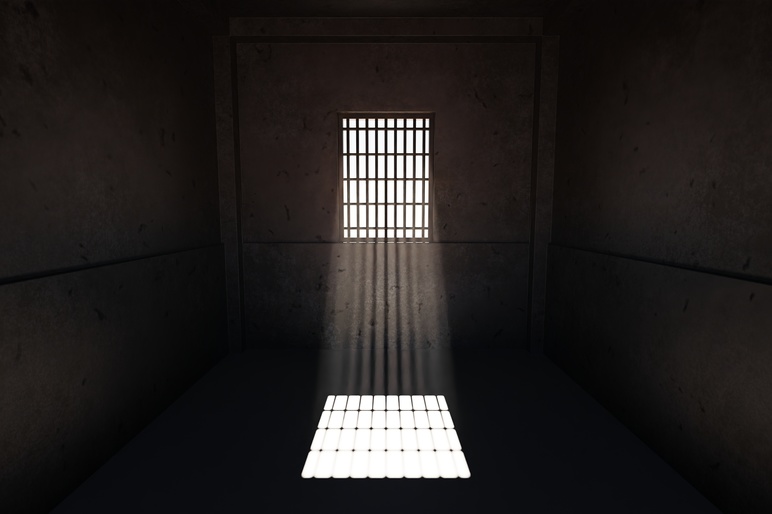
Solitary confinement is one of the most severe forms of deprivation of liberty that can be legally imposed on a person. Under the United Nations Standard Minimum Rules for the Treatment of Prisoners (the Nelson Mandela Rules), it is defined as the confinement of an individual for 22 hours or more a day without meaningful human contact [1]. The Mandela Rules provide procedural safeguards against the misuse of solitary confinement [2] and strictly prohibit indefinite and prolonged solitary confinement (used for more than 15 consecutive days) on the basis that they inflicts serious psychological and physical harm. Solitary confinement, therefore, must be used only in exceptional circumstances, as a last resort, for the shortest time possible, and subject to independent review and oversight. [3]
International human rights standards call on States to ensure that such practices are never applied to individuals with mental or physical disabilities, women who are pregnant, breastfeeding or with a child in prison, and children, whose vulnerability makes isolation particularly damaging to them. [4] Upholding these standards is not only a matter of compliance with international law but a core responsibility to ensure humane and dignified detention conditions to all individuals under State custody. However, data and practices across the globe gives us a different view of reality.
THREE KEY RESEARCH INITIATIVES AND REPORTS ON SOLITARY CONFINEMENT
In June 2025, the World Organisation Against Torture (OMCT) launched the Global Torture Index, with the support of more than 80 national civil society organisations, which assesses the risk of being subjected to torture and other forms of ill-treatment in any given country on an annual basis. In 2025, 27 countries across five regions were included, with plans to scale up coverage in future years. Through seven thematic pillars, the Index focuses, among others, on freedom from torture while deprived of liberty, and including safeguards and guarantees during detention. The data collected allows us to identify several key findings regarding solitary confinement.
In January 2024, the Mapping Solitary Confinement project was launched online on the SolitaryConfinement.Org site, with key findings published jointly with the Association for the Prevention of Torture. This is a collaborative project coordinated by Dr Sharon Shalev, involving an international network of academics, lawyers, civil society organisations, prison administrations and oversight bodies spanning six continents. The project aims to map the legal regulation, use, monitoring and oversight of solitary confinement practices in places of detention across the world, using a detailed standardised questionnaire. This project is ongoing, with new “country reports” being added on a regular basis. As of November 2025, it included reports from 65 jurisdictions in 49 countries.
In January 2022, Physicians for Human Rights Israel (PHRI) and Antigone convened an international group of experts with multidisciplinary skills to develop a set of guidelines to overcome solitary confinement at a global level. The result of this process is the International Guiding Statement on alternatives to solitary confinement (IGS) [5], published in May 2023. The IGS aims to bridge the gap between international law and medical positions on the harm caused by solitary confinement, by presenting a consensus on measures that can help reduce and ultimately abolish this practice. On 11 December 2025, the IGS was launched worldwide during the online conference “Ending Solitary Confinement”, with the aim of encouraging the positioning of the IGS within the framework of international soft law.
KEY MESSAGES
Solitary confinement is extremely damaging to health and wellbeing, and it negatively affects a person’s chances of successful reintegration. In some cases, it can amount to inhuman or degrading treatment or punishment, and even torture. Yet, it is a practice which is deeply embedded in prison systems worldwide. It is still used as the default option in certain situations and perceived by prison administrators as a necessary part of the fabric of the prison. Challenging that misconception is not easy, but there are examples of good practice and alternatives which can be amplified. Demonstrating that solitary confinement is still widespread internationally, recalling its harmful effects and proposing viable alternatives is necessary and an important step towards humanising, reducing and ultimately eliminating its use in places of deprivation of liberty worldwide.
Read our full analysis here.

REFERENCES
[1] United Nations General Assembly, United Nations Standard Minimum Rules for the Treatment of Prisoners (the Nelson Mandela Rules), GA Res 70/175, UN Doc A/RES/70/175 (17 December 2015). Rule 44.
[2] Ibid. Rule 43.
[3] Ibid. Rule 45.
[4] Including the UN Rules for the Protection of Juveniles Deprived of their Liberty (resolution 45/113, annex); and the UN Rules for the Treatment of Women Prisoners and Non-custodial Measures for Women Offenders (the Bangkok Rules) (resolution 65/229, annex).
[5] The IGS is accompanied by a Background Brief: Alternatives to Solitary confinement aimed at providing additional background in formation.