Ensure that the State and its authorities duly comply with their international obligations arising from the decisions, recommendations and judgments issued by United Nations human rights bodies and the Inter-American Human Rights System.
Fully comply with the General Law to Prevent, Investigate and Punish Torture (LGT), guaranteeing the existence of Prosecutor's Offices or Units specialised in the investigation of the crime of torture throughout the country, with the necessary human, financial and material resources to operate properly, as well as ensuring the operational autonomy and budgetary sufficiency of the National Mechanism for the Prevention of Torture.
Guarantee the operational autonomy and adequate funding of the National Preventive Mechanism.
Ensure that judicial authorities apply the rule of exclusion of unlawful evidence obtained under torture, and that judicial independence is guaranteed in light of the recent reform in this area.
Repeal pre-trial detention and the concept of arraigo from the Constitution, as well as harmonise domestic rules on flagrancia (in flagrante delicto) with international human rights law.
Ensure that all physical and psychological evaluations carried out on victims of torture comply with the principles, procedures and guidelines contained in the Istanbul Protocol, ensuring the independence and impartiality of the experts and health professionals who perform them.
Ensure that all victims of torture obtain redress, including the right to fair and adequate compensation and the means for as full rehabilitation as possible.
Cease the punitive practice of manufacturing guilty parties and publicly communicate a strong and clear message to raise social awareness on the importance of respecting and protecting human rights, including the prohibition of arbitrary detention and torture.
Publicly recognise the legitimacy of the right to protest as a factor that contributes to strengthening the rule of law, refraining from making stigmatising statements against protesters and public assemblies. Ensure that federal and state prosecutors, as well as national and state human rights commissions, conduct prompt, impartial, independent, efficient and thorough investigations into human rights violations committed in the context of public assemblies.
Adopt and implement, in collaboration with human rights organisations, defenders and journalists, a comprehensive protection policy that incorporates specific actions in the areas of prevention, protection, investigation and reparation, from an intersectional, differentiated and gender-sensitive perspective.
The approval of the General Law to Prevent, Investigate, and Punish Torture and Other Cruel, Inhuman, or Degrading Treatment on 26 June 2017 was a significant milestone, driven by victims, survivors, and civil society organisations. The law aims to prevent, investigate, and punish acts of torture and other cruel, inhuman, or degrading treatment. However, challenges persist in its effective implementation at both federal and state levels, as well as in providing adequate training for public officials. Despite strong civil society engagement, the National Programme to Prevent and Punish Torture has yet to be formally adopted.

The regular implementation of the Encuesta Nacional de Población Privada de la Libertad (National Survey of the Population Deprived of Liberty, ENPOL) and the publication of its findings are crucial for understanding prison conditions and advocating for human rights. The results of the 2021 ENPOL survey, released on 7 December, are a key resource for developing strategies focused on justice, social reintegration, and peace for the more than 220,500 individuals deprived of their liberty. The findings highlight the need for ongoing monitoring to evaluate detainees' rights and access to services, while also addressing persistent issues of torture and inhumane treatment.
The Federal Institute of Public Defence (IFDP) has strengthened its efforts to combat torture by establishing a Technical Secretariat for Combating Torture, Cruel, and Inhuman Treatment. This secretariat coordinates initiatives to defend individuals facing criminal charges, ensures the exclusion of evidence obtained through rights violations, and actively works to prevent and report instances of torture. Since mid-2019, a Working Group, in partnership with civil society organisations, has supported the IFDP in developing comprehensive anti-torture strategies.
Access to information must be guaranteed in every society, both in law and practice, to ensure State transparency and accountability. It allows organisations, journalists, and interested individuals to request data on the actions of public bodies, protocols, and statistics on human rights violations. This right not only enhances public debate and civic participation in decision-making but also helps improve public policies and safeguards the dignity of individuals in State custody. Civil society organisations and human rights defenders play a key role in monitoring access to information laws and their implementation. This indicator reflects the challenges of accessing information within the country—the higher the score, the less transparent the State.
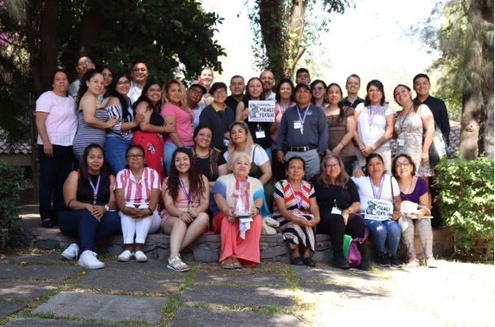
Victim Statements- "In the face of oblivion, silence and persecution, we stress the importance of weaving networks, of recognising and accompanying each other in the processes that we continue to live every day”. - “We insist and denounce that torture is widespread, that it happens all over the country!” - "Jail and prison stay. You come out of it physically, but your mind stays there. So, we must work to also achieve emotionally, the freedom we long for". - "We have been separated from our families, and we have had to stay away from them because they keep us in prison away from them or we have to go and live elsewhere for fear of them doing something to us or our families.”