Related country resources
-
- Moldova
- 18.03.22
- Blog
 Read more
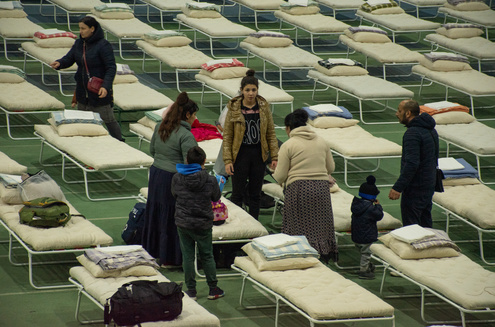
Moldova: the small country facing a big war
Review and reform national legislation on the use of force by law enforcement to align fully with international human rights standards, emphasising the principles of necessity, proportionality and accountability.
Commit to comprehensive reform by implementing measures to amend and address the systemic problems highlighted by the European Court of Human Rights, including inadequate detention conditions, insufficient remedies for victims, and the mistreatment of individuals in state custody.
Improve conditions in prisons and detention facilities in line with the Convention against Torture and the United Nations Standard Minimum Rules for the Treatment of Prisoners (the Nelson Mandela Rules), and the United Nations Rules for the Treatment of Women Prisoners, Non-custodial Measures for Women Offenders (Bangkok Rules).
Transfer the responsibilities of medical workers from the Ministry of Justice to the Ministry of Health to ensure independent and confidential medical care, including private examinations to document injuries and reduce abuse risks. Fully implement the Istanbul and Minnesota Protocols, ensuring that medico-legal examinations are conducted promptly and with standardised reporting to support investigations and trials effectively.
Strengthen the training of prison staff by adopting a holistic approach, combining initial and continuous education with mandatory assessments to ensure staff possess the necessary skills to prevent and address ill-treatment effectively.
Strengthen the NPM's capacity by providing adequate resources and authority, enforcing secure video surveillance in all detention facilities and ensuring transparent and independent investigations into abuses.
Increase efforts to combat impunity for torture and ill-treatment by ensuring that independent investigations are initiated ex officio, irrespective of a victim’s complaint, and prohibit the termination of proceedings based on reconciliation between the parties.
Provide adequate safeguards for prisoners who oppose criminal subcultures, including those who reject gang influence or criminal behaviour, by placing them in secure environments and ensuring they have equal access to rehabilitation programs, healthcare, and other essential services.
Adopt a comprehensive legal framework to define victims of torture explicitly in national law and establish a legal framework that improves access to rehabilitation by ensuring that all victims, regardless of their pursuit of judicial remedies, have access to medical, psychological, legal and social support.
Establish specialised units to investigate gender-based and sexual violence, ensuring confidentiality and multilingual support in complaints procedures and expanding access to shelters, social services and residence permits for victims and their families.
The Ministry of Justice in the Republic of Moldova collaborated with civil society to evaluate and monitor detention conditions. This partnership identified discrepancies in the calculation of detention capacity, which led to the development of a methodology for objectively assessing overcrowding in line with international standards.
In 2023, legislative amendments were introduced so that investigations into cases of medium bodily harm in detention are no longer dependent on a victim’s complaint. However, minor injuries remain unaddressed by criminal law, which continues to be a gap that must be filled to ensure fair treatment for all detainees.
Access to information must be guaranteed in every society, both in law and practice, to ensure State transparency and accountability. It allows organisations, journalists, and interested individuals to request data on the actions of public bodies, protocols, and statistics on human rights violations. This right not only enhances public debate and civic participation in decision-making but also helps improve public policies and safeguards the dignity of individuals in State custody. Civil society organisations and human rights defenders play a key role in monitoring access to information laws and their implementation. This indicator reflects the challenges of accessing information within the country—the higher the score, the less transparent the State.