“It Is My Way of Life and My Legacy”: Interview with a Salvadoran Woman Human Rights Defender in Exile
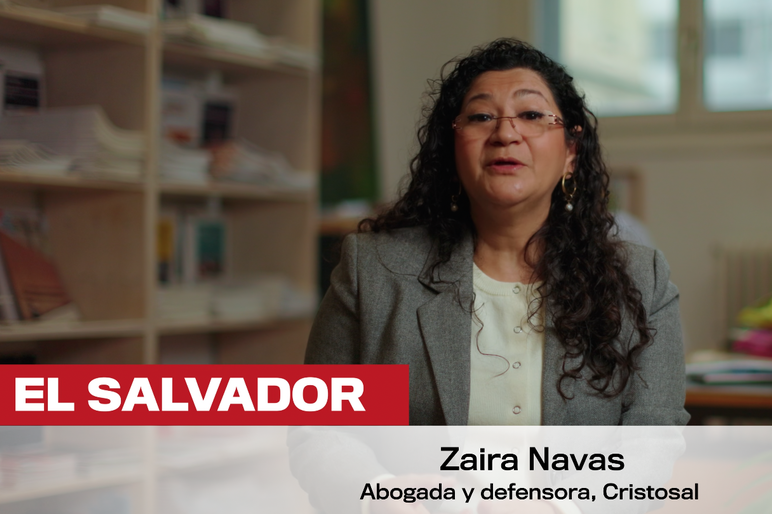
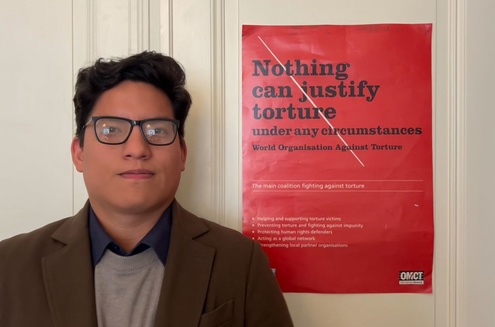
In recent years, civic space has significantly reduced in El Salvador, under a state of exception, a state of emergency that suspended several constitutional rights. Human rights defenders have faced increasing threats and criminalisation, forcing many into silence or exile. Zaira Navas is a lawyer and human rights defender at Cristosal, partner of OMCT and the SOS-Torture Network. She is also a member of OMCT’s Latin America litigators’ group, part of four regional litigators’ groups that bring together lawyers and human rights defenders working at the front lines of the fight against torture and ill-treatment. Last year, Zaira Navas was pushed to flee El Salvador, after her colleague, Ruth López, prominent Salvadoran activist, was arrested. In Geneva to attend the Human Rights Council, she tells us about her experience being a woman human rights defender in exile, and where she still finds hope in her work.
What was it like to make the decision to leave El Salvador?
I am currently in exile due to repression under the state of exception in El Salvador imposed by President Nayib Bukele, which intensified in 2025. In May, my colleague Ruth López was detained on absurd corruption charges. That same week, I learned I could also be arrested. Our organisation, Cristosal, asked us to protect ourselves. There was no time to think about it. We left the country believing we would return in 15 days, but I have now been outside El Salvador for nine months.
How has exile affected you, as a woman and as a human rights defender?
The first months were filled with uncertainty. Violence and aggression against defenders increased, and our organisation was forced to close its operations in the country. There was no turning back.
There was a period when I felt depressed. Not only for being away from my country, but because I thought I could not continue my work. I am now separated from my family, but I am working, and that is a very important source of encouragement.
In your experience, how does repression affect women differently, especially when it forces them into exile?
In El Salvador and across Central America, women are victims of gender-based and structural violence from the moment we are born. When we become human rights defenders, we are even more exposed.
Working outside the country, we are questioned much more, including why we left our families. Our professionalism and our genuine commitment to defending human rights are also put into question. Being a woman defender also means confronting personal and family responsibilities. I am the caregiver for the elderly members of my family, which leads to a lot of internal conflict that men do not face in the same way.
What is currently happening with civil society and human rights defenders in your country?
Civic space is increasingly restricted. Since 2019, civil society has been accused of political alignment and defending criminals. Persecution has taken many forms.
Administratively, a Foreign Agents Law was put in place, which imposes a 30% tax on international funds, making operations difficult and allowing the state to control organisations, especially the ones that question the state of exception. The criminalisation of human rights defenders has also led to self-censorship, reduced public denunciations, and a shift toward humanitarian work.
What actions should the international community take to ensure a safe environment for defending human rights in El Salvador?
The international community must closely monitor human rights violations in El Salvador and must pay close attention to what is happening in our country, questioning the anti-democratic methods and internal policies.
International cooperation allows us to keep working. It is important that organisations that support human rights groups look for new ways to cooperate so that the work can continue from outside the country.
Despite pressure, many defenders continue their work from exile. What gives you the hope to keep going?
What gives human rights defenders hope is being the voice of those who cannot defend their rights inside El Salvador. Our hope is to continue denouncing abuses and to generate at least some influence that can bring about change in the country. I have been a human rights defender for 30 years. I don’t know any other way of seeing the world. It is my way of life and my legacy.
My people come from a war and have suffered enormously. Now I have the duty to continue working against authoritarianism and repression. That is what gives me satisfaction. My people inspire me.