2025 Through 12 milestones: Shaping the Global Struggle Against Torture
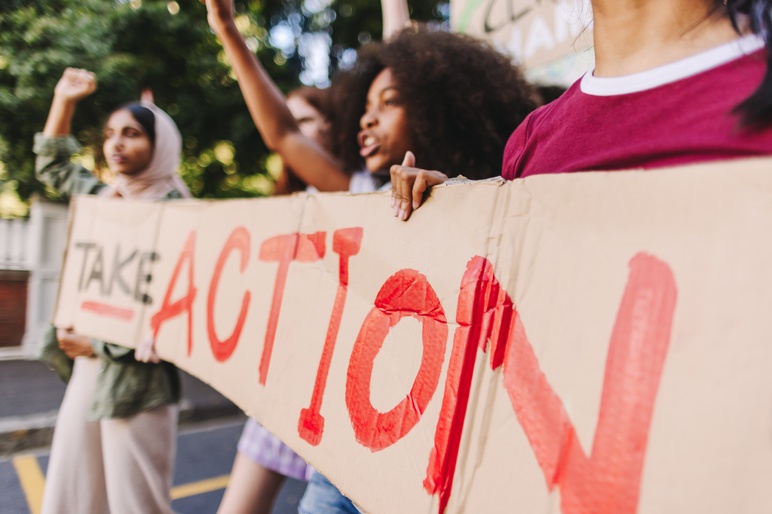
2025 was a year marked by shrinking civic spaces and increasing human rights abuses across the world. Georgia witnessed a crackdown on the voices and spaces of civil society by government authorities. Burundi continued to face an alarming human rights crisis with enforced disappearances, arbitrary detention, and increasing attacks on civilians. Meanwhile, Colombia witnessed persistent criminalisation of women human rights defenders. These are only a few of the many challenges that defined the past year, highlighting the urgent need for shared efforts to defend human rights.
In the face of these challenges, hope was not lost; rather, it strengthened our resolve. OMCT along with its SOS-Torture network members and partners across the globe continued to push back against torture and ill-treatment worldwide.
As we near the end of 2025, we celebrate 12 significant milestones that showcase the impact of our collective efforts and inspire continued commitment to a world free from torture.
Africa
In 2025, the OMCT Africa Litigators' Group reconvened in Benin and marked the significant legal victories secured in 2025 across the continent. The United Nations Committee Against Torture (CAT) condemned Burundi for the excessive police violence committed during law-enforcement operations. The ECOWAS Court of Justice rulings recognised the denial of essential hygiene products to detained women and the tear gassing of an 8-year-old by Togolese police forces as inhumane and degrading treatment. These legal wins underscore how strategic litigation, driven by an active network of litigators, can compel state accountability and advance the fight against torture.
Americas
In November 2025, Colombia ratified the Optional Protocol to the UN Convention Against Torture (OPCAT), after 23 years of sustained advocacy efforts by civil society, mainly led by the Colombian Coalition against Torture, of which OMCT is a member. This marks a significant step towards preventing torture as it paves the way for establishing independent National Preventive Mechanisms (NPMs) to monitor detention facilities. OMCT supported the ratification through continuous actions, including the submission of alternative reports to the CAT in 2023, maintaining close dialogues with authorities and with the launch of the Global Torture Index by the OMCT earlier this year (see below).
Asia
Working together through coordinated advocacy and consultations, about a hundred Afghan and international civil society organisations, including OMCT, have confronted rising human rights abuses and repeatedly called for an accountability mechanism since 2022. Our joint efforts paid off on 6 October 2025, when the Human Rights Council established the Independent Investigative Mechanism for Afghanistan. This major step for justice will collect and preserve evidence of serious crimes to support future prosecutions.
Eastern Europe and Central Asia
In 2025, OMCT and its partners strengthened their influence on international accountability in Europe and Central Asia. The European Court of Human Rights cited our reports in the landmark Ukraine v. Russia case, highlighting our role in shaping global discussions on torture and enforced disappearances. Our findings were also referenced by the UN Commission of Inquiry on Ukraine. Meanwhile, our rapid and comprehensive response in Georgia demonstrated timely and effective human rights engagement.
Middle East and North Africa
In November 2025, Israel was reviewed, after nearly 10 years, by the United Nations CAT. Many of the concerns raised by OMCT, SOS-Torture network members, and other civil society organisations, ahead of the review, were echoed by the CAT, who warned against systematic torture and other ill-treatment against Palestinians. This review came at a time when all the main Palestinian human rights organisations have been subjected to sanctions by the U.S. government, which have effectively hindered their ability to document grave human rights violations.
Women
2025 witnessed the successful relaunch of the African Women Leadership Against Torture initiative bringing together more than 50 participants from across the SOS-Torture network in two regional meetings. These exchanges facilitated collective reflection, peer support, and strategic coordination, while reinforcing the crucial role of women in shaping the anti-torture agenda. Partners identified at least 30 women leaders across the network who would benefit from the targeted mentorship. Through this initiative, OMCT and partners have helped catalyse a renewed community of women leaders committed to a collective struggle against torture.
Children
Five years after OMCT’s report documenting more than 120 cases of children victims of extrajudicial killings in the Philippines, former President Duterte was arrested on 12 March 2025, following an arrest warrant issued against him by the International Criminal Court (ICC). He was later charged for crimes against humanity committed under his brutal, “war on drugs” campaign. This historic step towards justice reflects years of coordinated efforts by OMCT, local members and partners to expose extrajudicial killings, harassment and torture experienced by thousands of victims, including children and their families.
Global Week Against Torture
This year’s Global Week Against Torture brought together over 2,200 participants across 31 events, creating one of OMCT’s strongest spaces for cross-regional solidarity. With contributions from 138 speakers in 11 languages, the week deepened collective learning and connected over 90% of participants more strongly to the anti-torture movement. It continues to stand as a powerful moment of global coordination, survivor-centred dialogue, and shared action.
SOS-Defenders
2025 marked the first full year since the launch of SOS-Defenders, a platform by OMCT and its partners to document and advocate against the arbitrary detention of human rights defenders worldwide. Over the year, it continued to document cases, contributed to policy debates on the growing criminalisation of human rights work, and mobilised key actors to protect and secure the release of HRDs. Featured at major international events—including the Global Week Against Torture 2025, the International Civil Society Week 2025, and the 60th session of the UN Human Rights Council, SOS-Defenders brings together communities and partners to challenge censorship by detention and strengthen protection for human rights defenders.
Global Torture Index
OMCT, with the SOS-Torture Network, launched the Global Torture Index, a unique, data-driven tool assessing the risk of torture worldwide, on 25 June 2025 during the Global Week against Torture, marking the end of its two-year pilot phase. The remote event gathered 200 participants, including members and partners from 26 countries, UN bodies, experts, academia, diplomats and victims-led groups. Its visibility was amplified through subsequent national events and a Geneva press conference, generating international media coverage in 14 countries. The launch promoted the Index as a key data-driven tool for assessing torture risks, supporting evidence-based action, guiding policy and advocacy and strengthening accountability.
Observatory for the Protection of Human Rights Defenders
The OMCT Human Rights Defenders Programme successfully convened and steered, within the framework of the OMCT–FIDH Observatory partnership, the 12th Inter-Mechanisms Meeting on arbitrary detention. Bringing together UN and regional mandate holders, civil society actors, and EU Human Rights Ambassadors, the meeting strengthened coordination, generated concrete prevention and response strategies, and culminated in a rare joint statement calling for collective, sustained action to secure the release and protection of detained human rights defenders worldwide.
United Against Torture Consortium (UATC)
The UATC has continued to advance its work on torture and ill-treatment in the context of protests, publishing the policy paper Protesting Without Fear, which provides States with critical guidance to prevent and address these violations. The UATC further contributed global efforts for torture-free trade, which supported the revision of the EU Anti-Torture Regulation. These priorities guided discussions at the first UATC Regional Partners Meeting in Africa, which gathered 47 participants from 21 countries, including survivors, civil society organisations (CSOs), national human rights institutions (NHRIs), and National Preventive Mechanisms (NPMs,) for two days of strategic discussions and exchanges to shape action at local, national, and regional levels.