Regional Litigators’ Groups: Collective Resistance Against Torture and Impunity
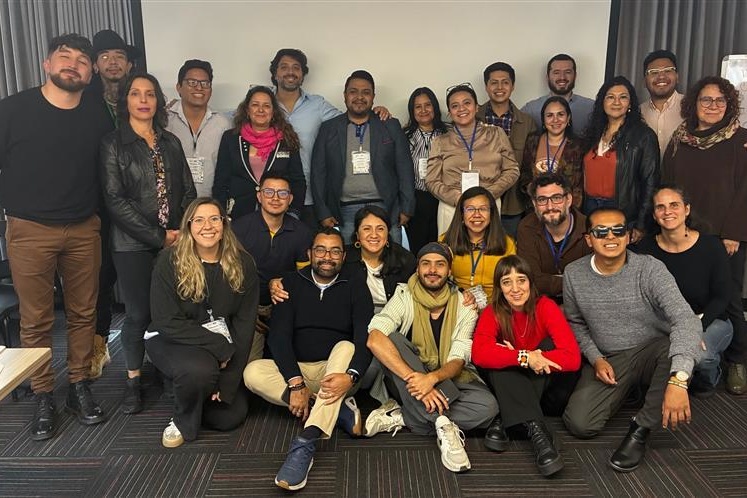
In 2019, the OMCT and members of the SOS-Torture Network established three Regional Litigators’ Groups in Africa, Asia, and Latin America, followed by a fourth group in Europe and Central Asia (ECA) in 2024. These groups bring together lawyers and human rights defenders working at the front lines of the fight against torture and other forms of ill-treatment.
Across regions, members confront similar challenges: obstacles to effective documentation, deeply flawed justice systems, lack of a victim-centered approach, resulting in entrenched impunity. As illustrated by the Global Torture Index, victims are often discouraged from lodging complaints, and the risk of reprisals is high. In 65% of the countries covered, the risk of reprisals and intimidation is often a reality.
Over the past years, the groups have become spaces of solidarity and collective action, supporting joint legal submissions before domestic courts, regional jurisdictions, and international mechanisms, as well as coordinated advocacy around emblematic cases. Each Regional Litigators’ Group includes between 8 and 15 members. Collectively, the groups have contributed to 90 legal submissions in 22 countries, resulting in 34 victories to date, including several landmark decisions.
One of the most common strategies used to silence and intimidate human rights defenders, lawyers in particular, is judicial harassment, including unfounded criminal charges, civil lawsuits, or administrative proceedings. These tactics are often accompanied by surveillance, threats, smear campaigns, or professional sanctions. Several members of the Litigators’ Groups have faced such reprisals, and some have been forced into exile.
This blog post highlights both the challenges faced by anti-torture litigators and the strategies developed to overcome or mitigate them, in recognition of the courage and commitment of lawyers and human rights defenders worldwide who stand alongside survivors of torture and other ill-treatment, on occasion of the World Day of the Endangered Lawyer.
Africa Litigators’ Group (Groupe d’intervention judiciaire SOS-Torture)
Lawyers from several African countries, particularly in the Sahel region, face serious challenges in the course of their human rights work. These include surveillance, intimidation, and direct threats from authorities when defending victims of human rights violations. In Burkina Faso, there is concern that the reinstatement of the death penalty will be used as a tool of political repression against human rights defenders and journalists. In other contexts, such as Burundi, lawyers have been arbitrarily disbarred in retaliation for their advocacy and forced into exile, effectively preventing them from continuing to practice law in their home countries and from defending the most at-risk populations.
In response, members of the Litigators’ Group have developed coping mechanisms grounded in regional solidarity. Lawyers from other African countries have offered to act on behalf of threatened or disbarred colleagues, thereby reducing the exposure of those lawyers to reprisals while ensuring that cases continue to be pursued.
This approach is particularly effective within the framework of the Economic Community of West African States (ECOWAS), which comprises 15 member States. Under ECOWAS law, any lawyer from a member State may represent victims before the ECOWAS Court of Justice, a regional court with jurisdiction over individual complaints alleging human rights violations. In 2025, a lawyer obtained two conviction decisions against Togo on behalf of victims of inhumane and degrading treatment. This system enables cross-border legal representation as a practical and protective form of solidarity, ensuring access to justice even in highly repressive environments.
Asia Litigators’ Group
A central challenge faced by members of the Asia Litigators’ Group is the use of procedural barriers to block torture litigation, even in contexts where courts remain formally accessible. Short statutes of limitation, narrow interpretations (e.g. of torture or rape) and other legal barriers including lack of independent investigations and inadequate sentencing have often been used to prevent judicial scrutiny of torture and ill-treatment. These procedural obstacles risk turning access to justice into a purely theoretical guarantee for victims.
To counter procedural barriers and judicial reluctance, members of the Asia Litigators’ Group have increasingly paired litigation with targeted advocacy directed at international accountability mechanisms and public audiences. This has included engagement with UN treaty bodies, in particular the Committee against Torture, as well as public statements (e.g. Thailand, Philippines), advocacy directed towards UN bodies, and diplomatic missions, resulting in trial monitoring by embassies.
Europe and Central Asia (ECA) Litigators’ Group
In 2024, members of the ECA Litigators’ Group operated in an increasingly restrictive environment marked by shrinking civic space, political pressure on the judiciary, and the growing securitisation of human rights work. These trends have had a direct impact on accountability for torture and ill-treatment, as States increasingly rely on exceptional legal frameworks to limit scrutiny of abuses.
A specific challenge faced by ECA litigators has been the misuse of anti-terrorism legislation and “foreign agent” laws. Anti-terrorism charges are frequently brought against victims, witnesses, or their lawyers, shifting attention away from allegations of torture and framing abuse within national security narratives. This legislation is used to stigmatise organisations working on torture and ill-treatment cases, restricted access to funding, increased administrative and criminal pressure, and discouraged victims from coming forward. Together, these laws have been used to obstruct investigations, restrict defense rights, and undermine the effective litigation of torture and ill-treatment.
To respond, members of the ECA Litigators’ Group have strengthened coordination and peer support while combining domestic litigation with international advocacy where possible. This has included challenging the misuse of anti-terrorism frameworks in court, documenting the chilling effect of “foreign agent” laws, and engaging international mechanisms such as UN Treaty Bodies and the European Court of Human Rights, to expose structural patterns of abuse.
Latin America Litigators’ Group (Grupo de Litigantes contra la tortura)
Democratic backsliding in Latin America has seriously weakened the rule of law, as governments increasingly undermine core democratic principles such as judicial independence, the separation of powers, open civic space, and the freedoms of association and assembly, while also reducing accessibility for victim’s access to justice. For example, in Peru, Parliament granted amnesty in 2025 to armed forces members involved in human rights violations during the internal conflict (1980-2000), undermining victims' access to justice, including for those with rulings from the Inter-American Court of Human Rights.
Faced with this reality, the regional Litigators’ Group was established not only as a space to share strategies and learn from one another, but also as a platform for collective action, public denunciation, and regional solidarity. A recent example is the joint statement condemning the massacre in Alemão and Penha in Rio de Janeiro, Brazil, in October last year.
Through judicial and quasi-judicial mechanisms, the Group has sought to secure justice for victims and survivors of torture pursuing a victim-centered approach that goes beyond legal action to include psychosocial support, capacity building, and advocacy. For this reason, at its last in-person meeting in Bogota, the Group met with young torture survivors from the Mocao movement, a survivor-led initiative founded by victims of police-inflicted eye injuries during protests in Colombia. Through collective mobilisation, it has become a powerful actor influencing reform processes in the country.
In addition, as civic space continues to shrink in the region, members of the group remain vocal in denouncing restrictive laws and regulations targeting NGOs and in raising awareness of the risks faced by lawyers and other human rights defenders. This is particularly urgent in contexts such as Venezuela or El Salvador, where human rights defenders are arbitrarily detained for their work.
Litigators’ Group Members are based in:
Africa: Ivory Coast, Togo, DRC, Cameroon, Congo, Burundi, Chad, Benin, Niger, Burkina Faso.
Americas: Argentina, Brazil, Colombia, Ecuador, El Salvador, Guatemala, Honduras, Mexico, Peru, Venezuela
Asia: India, Nepal, Indonesia, Sri Lanka, Philippines, Pakistan, South Korea
Europe and Central Asia: Kazakhstan, Poland, Armenia, Switzerland, Georgia, Italy, Russia,
France, Germany, Moldova, Spain, Tajikistan, Ukraine, and Kyrgyzstan.