“What Really Happens in Places Where No One Is Looking”: Interview with Argentinian Human Rights Defender
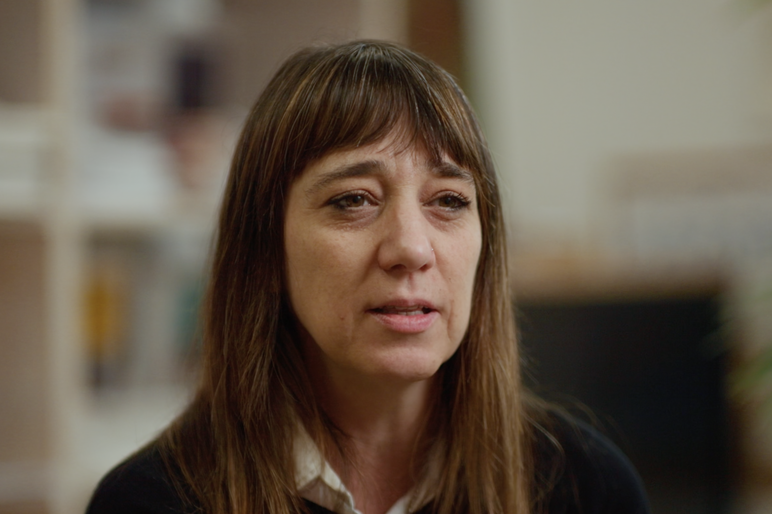
Macarena Fernández Hofmann is the Coordinator of the Criminal Justice Policy and Violence in Confinement team at the Center for Legal and Social Studies (CELS), SOS-Torture network member of OMCT, based in Argentina. The change of government in 2023 came with a rollback of human rights and a shrinking civic space for human rights defenders and social movements trying to reverse it. As Macarena Fernández Hofmann attended the UN Committee Against Torture’s review of Argentina, she shed some light on the current situation and some of OMCT and partners’ Global Torture Index findings.
How is the current human rights climate in Argentina?
Inside places of detention, particularly in police stations, there is an abusive use of force that can amount to torture or cruel, inhuman, or degrading treatment. Extreme overcrowding also creates conditions of extreme violence, and new forms of restrictive imprisonment have emerged, accompanied by reports of violence, such as serious cases in the province of Santa Fe, where a torture incident involving 160 detainees was reported in March 2024.
OMCT’s Global Torture Index classifies the level of risk of torture in Argentina as considerable. Why?
Inside places of detention, particularly in police stations, there is an abusive use of force that can amount to torture or cruel, inhuman, or degrading treatment. Extreme overcrowding also creates conditions of extreme violence, and new forms of restrictive imprisonment have emerged, accompanied by reports of violence, such as serious cases in the province of Santa Fe, where a torture incident involving 160 detainees was reported in March 2024.
What are the main obstacles to addressing this violence?
In places of detention victims lack the ability to report due to fear of reprisals. In Argentina, there is no protection for people who report abuses while they are in detention, and there is also a lack of commitment and efficiency in judicial investigations that perpetuates impunity, and impunity is the condition that allows torture to exist.
What changes are necessary to ensure more prosecutions for cases of torture?
It is necessary for the Prosecutor’s Office to be committed above all. For this, prosecutors need to be trained and sensitised regarding what torture is. Protection is needed for detainees, so they dare to overcome fear, and report abuses. Protection is also needed for the families of detainees who accompany cases when torture is reported. A case of torture does not end when the event occurs, it continues for both the victims and their families. It is essential that they have protection and safety.
The Index highlights the government's efforts to dismantle policies of memory, truth, and justice. What does this mean for Argentina?
This dismantling carried out by Javier Milei’s government implies that reparations were reduced for victims of Argentina’s human rights violations during the 1976-1983 military dictatorship, nor for victims of institutional violence. Archives of memory have been dismantled, which are fundamental for providing documentation for ongoing cases in Argentina. There is also an installation of a denialist discourse about state violence during the dictatorship, which results in the denial of 30,000 disappeared people and again reinforces the idea of impunity.
How was the UN Committee Against Torture’s review of Argentina?
This review is particularly important because it is happening in a context of regression. Argentina has historically had human rights violations but also progress, as well as significant civil society activism, and human rights protection policies. Today all of that is at risk, so this review is even more important. The Committee showed great openness and readiness to understand in depth the human rights issues in Argentina and to understand the perspective, complaints, and problems raised by civil society organisations. The Committee’s observations will allow us to update the human rights agenda in Argentina.
What keeps civil society in your country going despite the difficulties?
We have a very important responsibility as civil society organisations. We know what really happens in places where no one is looking. We must report abuses, go all the way to seek truth, make known what is happening, and not give up. Argentina has a long tradition of activism, and we must uphold it.