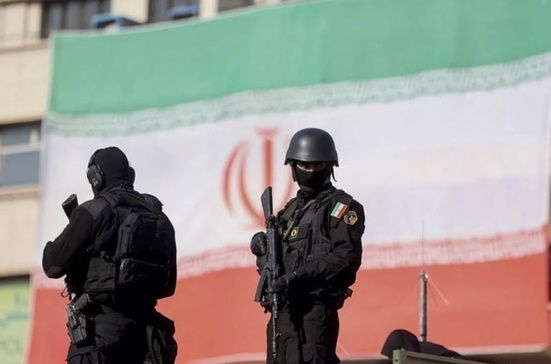
Iran: Accountability for Unlawful Use of Force Against Protesters
UN experts and independent civil society organisations, including partners in the United Against Torture Consortium, are examining credible evidence that Iranian security forces used indiscriminate and excessive force during recent protests, violating the right to life and potentially amounting to torture and other ill-treatment.
While the internet shutdown in Iran has hindered efforts to document and verify serious human rights violations, credible reports from the media and civil society organisations indicate that thousands of protesters – including children – have been unlawfully killed, arrested, or severely injured. Evidence shared with the International Rehabilitation Council for Torture Victims' Independent Forensic Expert Group indicates that protesters have been killed and severely injured by security forces using rifles and shotguns firing metal pellets at close range. Analysis of injury patterns suggests that many victims were shot while fleeing or with their backs turned, indicating that they posed no imminent threat at the time force was used against them. The severity of injuries, despite protesters wearing thick winter clothing, raises serious concerns that live ammunition was deployed.
Under international law, including the UN International Covenant on Civil and Political Rights and the UN Convention against Torture, Iran is strictly bound by the principles of legality, necessity, and proportionality in its policing of assemblies. The UN Basic Principles on the Use of Force and Firearms by Law Enforcement Officials make clear that firearms may only be used as a last resort to protect life against an imminent threat of death or serious injury. The United Nations Human Rights Guidance on Less-Lethal Weapons in Law Enforcement states, "The use of firearms to disperse an assembly is always unlawful." The Model Protocol for Law Enforcement Officials to Promote and Protect Human Rights in the Context of Peaceful Protests underscores that the role of law enforcement is to facilitate and protect assemblies, not suppress them. It prioritises dialogue, de-escalation, and accountability, and calls for independent oversight of security forces. Children are entitled to special protection under the Convention on the Rights of the Child. Deployment of force in protests involving children may constitute a particularly serious violation of international law and such use requires heightened restraint and precaution.
The recent crackdown mirrors patterns previously documented by the UN-mandated Independent International Fact-Finding Mission on Iran, including the use of unlawful lethal force and acts of torture and other ill-treatment, particularly in the context of the “Woman, Life, Freedom” movement. Those violations have been compounded by a persistent lack of accountability and entrenched structural impunity for State officials. All Iranians have the right to live in dignity and safety, and to protest peacefully without fear of violence, intimidation, or repression by the State.
The United Against Torture Consortium calls on Iran to refrain from any unnecessary or disproportionate use of force, immediately cease the use of lethal weapons against protesters, respect the rights to peaceful assembly and freedom of expression, unconditionally release all individuals arbitrarily detained for exercising these rights, and ensure accountability for use of force. We also call on Human Rights Council Member States to extend the mandate of the Independent International Fact-Finding Mission on the Islamic Republic of Iran and to ensure that it is clearly tasked with collecting, consolidating, and preserving evidence of torture, unlawful killings, and other serious human rights violations in line with international criminal law standards. States should ensure that the Mission is adequately resourced to support future accountability efforts and victims’ access to justice, given the absence of effective domestic remedies.
IRCT and Omega Research Foundation, together with the School of Public Health at the University of California, Berkeley, have produced a Protest Toolkit, now translated into Farsi, intended for use by protesters, activists, and civil society organisations to support the systematic collection of high-quality evidence of torture and related human rights violations during protests.
About the Consortium: The United Against Torture Consortium pools the strengths and expertise of six leading anti-torture organisations (IRCT, OMCT, FIACAT, APT, Omega Research Foundation and REDRESS) in partnership with over 200 civil society organisations in more than 100 countries, to strengthen and expand the anti-torture movement. The European Union funds this project.
The present statement was issued by OMCT, REDRESS, Omega Research Foundation, and IRCT.