Children’s Rights and President Duterte’s ICC Hearing: Interview with Filipino Activist

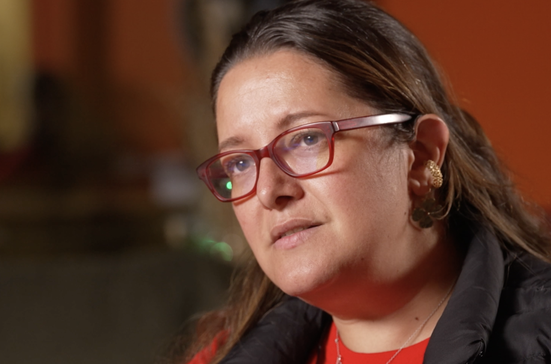
A year ago today, former Philippines’ president Rodrigo Duterte was arrested under an International Criminal Court (ICC) warrant, charging him with crimes against humanity linked to his “war on drugs”, a violent anti-drug campaign that led to thousands of killings attributed to the Philippine National Police. A year later, the confirmation of charges hearing took place in The Hague, in the pursuit of proceeding to trial. Rowena Legaspi, Executive Director of the Children’s Legal Rights and Development Center in the Philippines, partner of OMCT and SOS-Torture network member, traveled to The Hague to attend this hearing, hoping for a positive step forward in a years-long activism battle to defend the rights of children killed in this war on drugs. In this interview, Rowena Legaspi walks us through this journey towards justice and accountability.
As you arrive in The Hague, how are you feeling?
I am here to attend as an observer the confirmation of charges hearing of Rodrigo Roa Duterte. I witnessed how well the prosecution presented its evidence, including all the videos, public announcements and policies signed by Duterte and the Philippine National Police Chief of Staff. These are all evidence-based arguments, so I can see this case going to trial.
Why was documenting crimes against children so essential in the context of the drug war?
Early on after Duterte came into power, our organisation, the Children's Legal Rights and Development Centre, together with OMCT (World Organisation against Torture), started documenting the killings of children in the Philippines under Duterte’s drug war. It was important for children's cases to be documented because at that time, all published reports focused on adults’ killings. However, we observed the pattern that children, especially those who had just been discharged from prison facilities, became targets of the Philippine police. The voices of children, the stories of their killings, but also the children who were left orphaned because their parents were also killed, were overlooked by the newspapers. We started documenting, verifying cases on the ground. We then submitted this report to the United Nations’ mechanisms and to the ICC.
What does this recognition mean for child victims and their families?
Most victims of Duterte’s drug war came from poor families, and these include children who were homeless, or children who were arbitrarily arrested. As they come from marginalised communities, the children or their families generally don't have means and knowledge to access justice. What we do, documenting, recording the cases, amplifying their voices, putting them to the forefront of the human rights discourse, is really crucial for them, because it shows that society sees these children, values them, and hasn’t forgotten them.
The Universal Declaration of Human Rights always says, “people are born equal”, so we should not look upon status. We can document their cases and help them or their families, regardless of their status, because they are victims of human rights violations.
What risks have children, their families, and child rights defenders faced in speaking out?
When the Philippines was still governed by President Duterte, most families who wanted to file cases did not dare to do it because of the “kill policy” of the president. Some families filed cases, others dropped them after receiving threats from the authorities. There was no accountability, and the impunity of perpetrators was prevailing at the time. There was also an alleged reward system within the police forces for each killing. That’s why the ICC seemed like the last resort.
In the Philippines, when you are president, you are immune from suit. In the ICC, you are not immune, even if you are the head of state.
How do NGOs help victims and their families?
We don't just document their cases. We also determine what possible help the families might need, we provide psychosocial interventions. Healing is not only through legal action, and justice is not only served by putting the perpetrators in jail. Addressing the trauma and the emotions of losing a loved one in a horrendous way is also part of true healing.
What would justice look like for these children?
Justice would be to show that their cases are not isolated, that they were not just “collateral damage”. They were targets as well, and the fact that their cases are being included in the charges recognises that there were human rights violations against these children, injustices, and that they and their families suffered.
What has given you hope through years of activism?
In the Philippines, activism is something you have to have real passion, heart, and commitment for. When we see cases of marginalised children, being overlooked or mistreated, helping them is rewarding. And of course, working with other NGOs and human rights defenders, as well as putting trust in the international legal mechanisms in addressing national issues that are not addressed at the domestic level, is motivating.
We are looking forward to the ICC case proceeding to trial, and that families of victims will finally see the light at the end of the tunnel. This legal journey started in 2016, with the support of the OMCT and other organisations, and we didn’t know whether we would ever reach this stage. We will never stop defending the rights of children in the Philippines.