Bangladesh: Violence and Shrinking Civic Space Threaten Democratic Transition
The World Organisation against Torture (OMCT) and the International Rehabilitation Council for Torture Victims (IRCT) express grave concern at the sharp rise in violence and targeted attacks in Bangladesh at a critical moment in the country’s political transition. The fatal shooting of political activist Sharif Osman Bin Hadi, followed by mob assaults that have resulted in serious damage to major media and cultural institutions, signals a marked deterioration in the human rights environment ahead of the upcoming parliamentary elections in February 2026.
The level of violence by non-state actors is highly concerning. While independent verification remains limited, multiple reports have linked several mob attacks to individuals and groups operating under the banner of “Tawhidi Janata”. Although not a formal organisation, actions undertaken in this name highlight the growing risk of religious sentiment being instrumentalised to justify violence and suppress pluralism.
In this broader climate of heightened tension, a number of other grave incidents have been reported. On 18 December 2025, Dipu Chandra Das, a 25-year-old garment worker, was beaten and burned to death in Mymensingh following allegations of making derogatory remarks about religion. On the same night, several arson attacks were carried out against the offices of Prothom Alo and The Daily Star, trapping journalists inside burning buildings. Cultural institutions were also targeted, including Chhayanaut, which was vandalised, and Udichi Shilpi Gosthi, whose offices were set on fire.
In the days surrounding these incidents, hate speech and explicit calls for violence circulated widely on social media, including content shared by individuals with large public followings which was then further amplified by their networks. These events mark a serious escalation of violence ahead of the February parliamentary elections and underscore the urgent need for the interim government to uphold its obligations to protect life, prevent torture, safeguard civic space, and ensure accountability for all perpetrators.
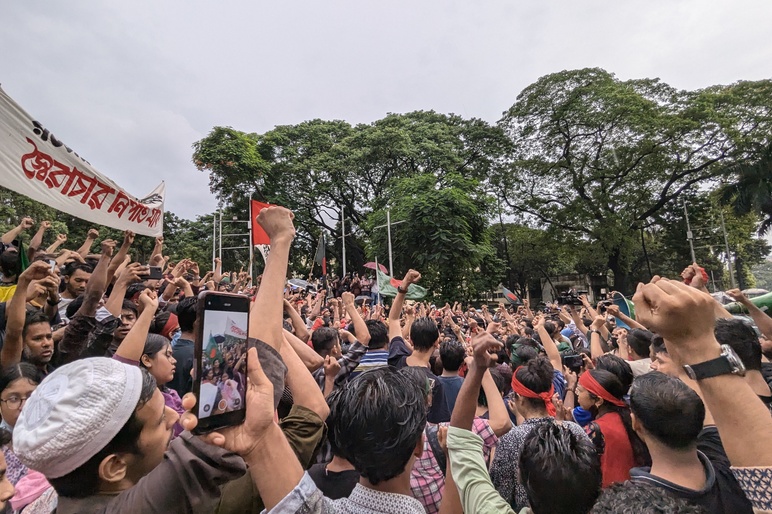
These developments must be understood against the backdrop of a longstanding pattern of torture, enforced disappearances, custodial deaths and extrajudicial killings that remain insufficiently addressed. Under the former, highly repressive administration, civil society organisations documented systematic abductions, secret detentions and severe physical and psychological abuse in security‑run facilities. Although an interim government assumed power in August 2024 following civil uprising, reports indicate that custodial deaths, torture and extrajudicial killings persist. Civil‑society observers have recorded at least eleven extrajudicial killings between July and September 2025, underscoring the failure to break the cycle of impunity. The scale of unresolved violations is further illustrated by the events surrounding the July uprising. According to the United Nations, at least 1,400 people were killed during the repression of protests, with many thousands more injured. While the interim authorities have initiated compensation measures for a number of victims and families, these efforts cover only a portion of those affected. For many, access to truth, accountability, and rehabilitation remains out of reach, reinforcing grievances and mistrust at a critical moment of political transition.
The interim government pledged to restore democratic governance and respect for human rights. Important steps have since been taken, including the ratification of the International Convention for the Protection of All Persons from Enforced Disappearance and the Optional Protocol to the Convention against Torture (OPCAT). These commitments now require concrete implementation. With parliamentary elections approaching, it is essential to ensure an environment in which individuals can participate safely and peacefully in public life, exercise freedom of expression and assembly.
We call on the authorities of Bangladesh to:
- Condemn all acts of violence, intimidation, and harassment targeting journalists, media workers, cultural institutions, human rights defenders, and members of vulnerable communities, and take concrete measures to ensure that they can operate freely and safely within an open and inclusive civic space.
- Deploy adequate and proportionate security measures where credible threats exist, including to prevent mob violence and communal attacks.
- Conduct swift, independent, and transparent investigations into the killings of Sharif Osman Bin Hadi and Dipu Chandra Das, as well as all recent attacks on media outlets, and cultural institutions.
- Ensure effective implementation of the Torture and Custodial Death (Prevention) Act, 2013, and relevant recommendations of the UN Committee against Torture to ensure accountability for all acts of torture by the current and previous government.
- Establish and operationalise an independent National Preventive Mechanism in line with the OPCAT.
- Provide comprehensive rehabilitation, medical, psychological, legal, and social, to survivors of torture and to families of those killed during the July 2024 uprising.